
THE HEIRESS (WILLIAM WYLER, 1949)
![]()
Randwick Ritz, Sydney:
2:00 PM
Saturday 02 May
11:00 AM
Monday 04 May
Lido Cinemas, Melbourne:
2:00 PM
Saturday 16 May
11:00 AM
Monday 18 May
Rating: G
Duration: 115 minutes
Country: USA
Language: English
Cast: Olivia de Havilland, Montgomery Clift, Ralph Richardson, Miriam Hopkins
SYDNEY TICKETS ⟶
MELBOURNE TICKETS ⟶
2:00 PM
Saturday 02 May
11:00 AM
Monday 04 May
Lido Cinemas, Melbourne:
2:00 PM
Saturday 16 May
11:00 AM
Monday 18 May
Rating: G
Duration: 115 minutes
Country: USA
Language: English
Cast: Olivia de Havilland, Montgomery Clift, Ralph Richardson, Miriam Hopkins
SYDNEY TICKETS ⟶
MELBOURNE TICKETS ⟶
4K RESTORATION – AUSTRALIAN PREMIERE
‘It’s a peerless, super-controlled movie … Wyler’s greatness here is that he can hold the elements of the film in his palm without constricting the actors. He frees them.’ – Pauline Kael, The New Yorker
‘It’s immaculately acted and crafted – it’s one of the finest films ever made about nineteenth-century America.’ – Martin Scorsese
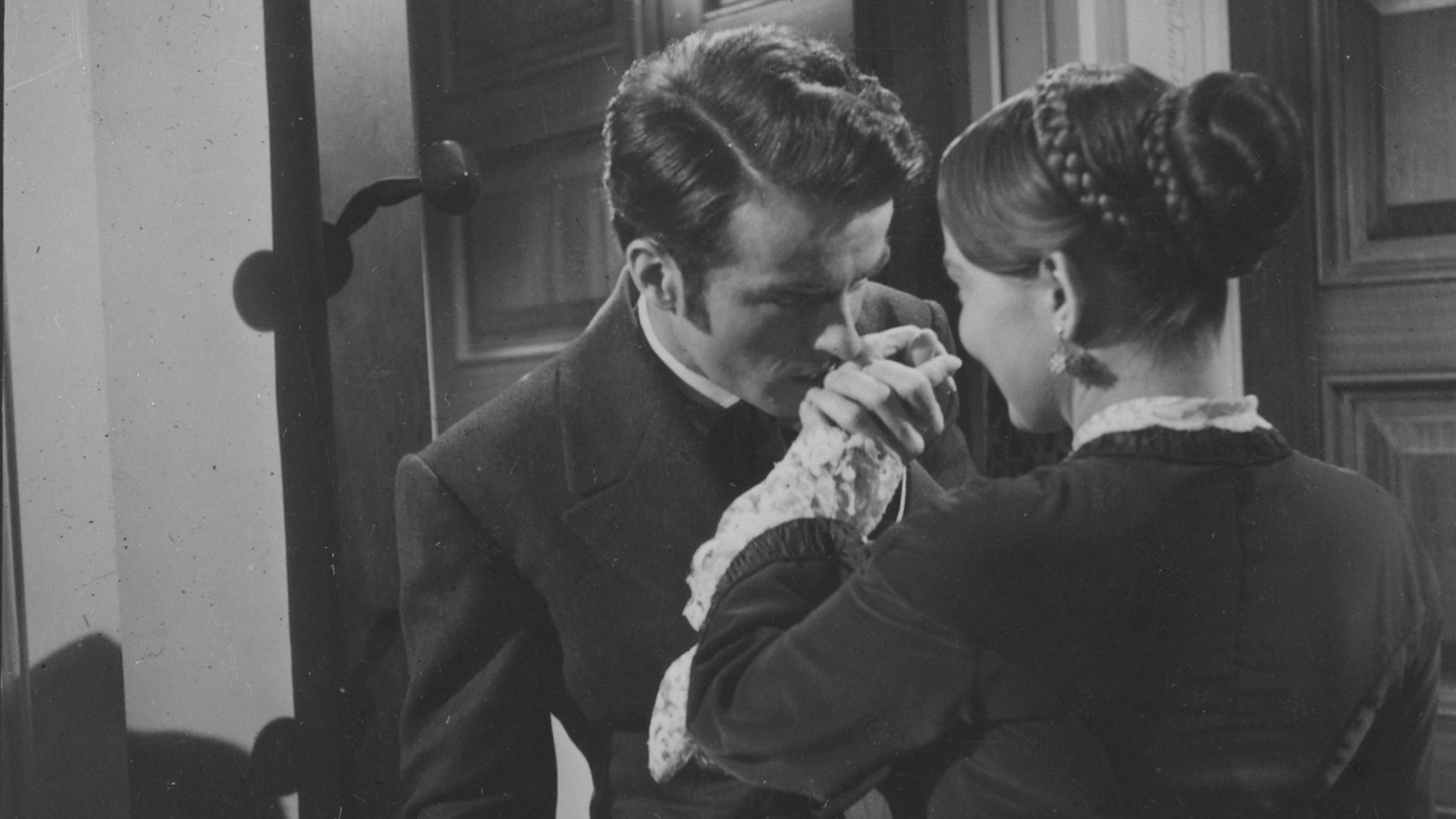
In mid-nineteenth-century New York, the timid and ungainly Catherine Sloper (Olivia de Havilland) lives with her wealthy father (Ralph Richardson), who spitefully measures her up against his beloved late wife. When Catherine is courted by the beguiling but fortuneless Morris Townsend (Montgomery Clift), her father’s resistance leads to grievous revelations about the true feelings of both men.
Based on a stage play adaptation of the 1880 Henry James novel Washington Square, William Wyler’s elegantly mounted character study is a prime example of classical Hollywood filmmaking and among the director’s finest achievements. It was the biggest winner at the 1950 Oscars, taking home awards for art direction, costume design, Aaron Copland’s score and de Havilland’s leading performance.
Introduced by John McDonald at Ritz Cinemas and Eloise Ross at Lido Cinemas.
‘It’s a peerless, super-controlled movie … Wyler’s greatness here is that he can hold the elements of the film in his palm without constricting the actors. He frees them.’ – Pauline Kael, The New Yorker
‘It’s immaculately acted and crafted – it’s one of the finest films ever made about nineteenth-century America.’ – Martin Scorsese
In mid-nineteenth-century New York, the timid and ungainly Catherine Sloper (Olivia de Havilland) lives with her wealthy father (Ralph Richardson), who spitefully measures her up against his beloved late wife. When Catherine is courted by the beguiling but fortuneless Morris Townsend (Montgomery Clift), her father’s resistance leads to grievous revelations about the true feelings of both men.
Based on a stage play adaptation of the 1880 Henry James novel Washington Square, William Wyler’s elegantly mounted character study is a prime example of classical Hollywood filmmaking and among the director’s finest achievements. It was the biggest winner at the 1950 Oscars, taking home awards for art direction, costume design, Aaron Copland’s score and de Havilland’s leading performance.
Introduced by John McDonald at Ritz Cinemas and Eloise Ross at Lido Cinemas.
FILM NOTES
By Isabella Gullifer-Laurie
By Isabella Gullifer-Laurie
Isabella Gullifer-Laurie lives in New York City. Her writing has appeared in Sydney Review of Books, The Saturday Paper, ArtReview, The Monthly, The Guardian, Senses of Cinema, and elsewhere.
In a career spanning five decades, William Wyler’s cinematic oeuvre was punctuated by compelling portraits of women: Bette Davis in Jezebel (1938); Merle Oberon in Wuthering Heights (1939); Audrey Hepburn in Roman Holiday (1953); and Barbra Streisand in Funny Girl (1968). On screen, these women — seductive belles, lost girls, bemused princesses, and stormy comediennes — faced situations both devastating and farcical. In Wyler’s hands, they partook in the psychological warfare of families, the cut-and-thrust of romantic relationships, and the bruising conditions of the workplace.
Born in 1902 in Alsace on the Franco-German border, Wyler left behind the family haberdashery business and moved to the United States in 1920. Through his cousin, the founder of Universal Studios Carl Laemmle, he found work as an errand-boy and was swiftly promoted to the role of assistant director on silent pictures. His films had a historical and generic range from the first. The early directorial works included Westerns, courtroom dramas, and romantic comedies. In Hollywood, Wyler’s star rose when he began to work with the cinematographer Gregg Toland, highly regarded for his innovation of the deep focus photographic technique that kept the whole depth of a scene crisply in focus.
Wyler was known as a stylist, fond of emotionally resonant narratives and character studies. Like Billy Wilder and John Huston, he favoured a tight script that offered entertainment, emotional range and a tease of social commentary (David Cairns, 2005). He was also a perfectionist, demanding so many takes from his actors that it earnt him the moniker ‘forty takes Willy.’
The Heiress numbers among the twelve stage plays Wyler reworked for the screen. Based on a drama of the same name by Ruth and Augustus Goetz, The Heiress is itself an adaptation of Henry James’ 1880 novel of money, manners and manoeuvres, Washington Square. The French film critic André Bazin (1967) appreciated Wyler’s deeply dramaturgical tendencies: ‘[although] Wyler has never attempted to hide the novelistic or theatrical nature of most of his scripts, he has made all the more apparent the cinematic phenomenon in its utmost purity.’
The film was an Oscar-winning production, with an all-star cast, costumes by Edith Head, austere black-and-white cinematography by Leo Tover, and a score by Aaron Copland. The orchestral rendition of ‘Plaisir d’amour’ drifts over the film with a melancholic warning: ‘The pleasure of love only lasts one moment; The regret of love lasts one’s whole life.’
Giving out onto the park of Washington Square, an amply furnished Manhattan townhouse has all the trappings of a stage-set: mirrors, sliding doors, huge windows. In this claustrophobic domicile, Catherine (Olivia de Havilland) lives with her widowed father, Dr. Sloper (Ralph Richardson) and her Aunt Penniman (Miriam Hopkins). A man of substantial wealth and consequence, Dr. Sloper’s rise in New York society is thanks to his suave intelligence and cunning. He regards his only child as something of a failure, unlike himself in manner and wit. In an early scene, Dr. Sloper discloses to Aunt Penniman that he finds Catherine a ‘mediocre and defenceless creature with not a shred of poise.’ Henry James writes: ‘She was not ugly; she had simply a plain, dull, gentle countenance.’ Shyly running around the house, always a nervous errand at hand, her apparent lack of authority as heiress of her father’s estate is visible.
The Heiress coalesces around a plot of romance, ambiguous intentions, and revenge. Catherine attracts the attention of a dashing, but hard-up, suitor named Morris Townsend (Montgomery Clift), who begins to frequent the house at Washington Square. Her family is astonished by his interest, Catherine deemed too docile, silly and plain to court any amorous attention. He is aided in his aggressive pursuit by Aunt Penniman in her role as swooning chaperone. Dr. Sloper intuits that Townsend is after Catherine’s newly minted American dollars, having burnt through his own fortune in an indulgent fit of youth. He forbids an engagement, happy to extinguish Catherine’s happiness as something purely theoretical. Townsend suggests an elopement but risks losing the Sloper inheritance.
This triangulation of allegiances and passions suits Wyler’s particularly cool emotional architecture, his interest in the concealed, the repressed and the unconsummated. Everyone is playing calculated games at the expense of Catherine: her father resents his daughter and regrets that she is an inadequate substitute for his wife; Townsend seeks her fortune but his motives have an air of ambiguity; Aunt Penniman thinks herself the centre of a domestic melodrama on the edge of a traditional marriage plot. Part-way through The Heiress, Catherine is a humiliated figure. Her love for Townsend is formulated in terms of her own lack: ‘Morris must love me … for all those who didn’t!’
In a film of strategies and planned escapes, it rarely escapes the drawing room. At its heart is a young woman, caged in by first impressions, seeking freedom from her master through the union of marriage. Her naivety is shattered when she realises how the men in her life observe her: to her father she is a failure (‘You embroider neatly,’ he says of her attributes); to Morris, callous and vain, she symbolises his own enriched comfort.
Familial battles are staged between a father and daughter – intellectual arguments, icy retreats and attacks. Catherine’s transcendence is hard won, and takes an uglier form. She is jilted by Townsend and withdraws from the world, her father swiftly dying soon after. Catherine becomes her own mistress, a stoic woman coldly self-sufficient. De Havilland, as the older Catherine, has a heavy repose and deepened voice; this is a woman whose dignity has been gained in silence.
The final scene of the film is strangely triumphant, a warped reckoning with Catherine’s own sacrifice. She has quashed her own feelings and ascends the magisterial staircase as Townsend bangs on the door, screaming for her love, and her money. ‘Yes, I can be cruel,’ she says, ‘I have been taught by masters.’ Her retreat into the house is a rebuke to the world outside, its social order and rules nothing to her any longer.
Born in 1902 in Alsace on the Franco-German border, Wyler left behind the family haberdashery business and moved to the United States in 1920. Through his cousin, the founder of Universal Studios Carl Laemmle, he found work as an errand-boy and was swiftly promoted to the role of assistant director on silent pictures. His films had a historical and generic range from the first. The early directorial works included Westerns, courtroom dramas, and romantic comedies. In Hollywood, Wyler’s star rose when he began to work with the cinematographer Gregg Toland, highly regarded for his innovation of the deep focus photographic technique that kept the whole depth of a scene crisply in focus.
Wyler was known as a stylist, fond of emotionally resonant narratives and character studies. Like Billy Wilder and John Huston, he favoured a tight script that offered entertainment, emotional range and a tease of social commentary (David Cairns, 2005). He was also a perfectionist, demanding so many takes from his actors that it earnt him the moniker ‘forty takes Willy.’
The Heiress numbers among the twelve stage plays Wyler reworked for the screen. Based on a drama of the same name by Ruth and Augustus Goetz, The Heiress is itself an adaptation of Henry James’ 1880 novel of money, manners and manoeuvres, Washington Square. The French film critic André Bazin (1967) appreciated Wyler’s deeply dramaturgical tendencies: ‘[although] Wyler has never attempted to hide the novelistic or theatrical nature of most of his scripts, he has made all the more apparent the cinematic phenomenon in its utmost purity.’
The film was an Oscar-winning production, with an all-star cast, costumes by Edith Head, austere black-and-white cinematography by Leo Tover, and a score by Aaron Copland. The orchestral rendition of ‘Plaisir d’amour’ drifts over the film with a melancholic warning: ‘The pleasure of love only lasts one moment; The regret of love lasts one’s whole life.’
Giving out onto the park of Washington Square, an amply furnished Manhattan townhouse has all the trappings of a stage-set: mirrors, sliding doors, huge windows. In this claustrophobic domicile, Catherine (Olivia de Havilland) lives with her widowed father, Dr. Sloper (Ralph Richardson) and her Aunt Penniman (Miriam Hopkins). A man of substantial wealth and consequence, Dr. Sloper’s rise in New York society is thanks to his suave intelligence and cunning. He regards his only child as something of a failure, unlike himself in manner and wit. In an early scene, Dr. Sloper discloses to Aunt Penniman that he finds Catherine a ‘mediocre and defenceless creature with not a shred of poise.’ Henry James writes: ‘She was not ugly; she had simply a plain, dull, gentle countenance.’ Shyly running around the house, always a nervous errand at hand, her apparent lack of authority as heiress of her father’s estate is visible.
The Heiress coalesces around a plot of romance, ambiguous intentions, and revenge. Catherine attracts the attention of a dashing, but hard-up, suitor named Morris Townsend (Montgomery Clift), who begins to frequent the house at Washington Square. Her family is astonished by his interest, Catherine deemed too docile, silly and plain to court any amorous attention. He is aided in his aggressive pursuit by Aunt Penniman in her role as swooning chaperone. Dr. Sloper intuits that Townsend is after Catherine’s newly minted American dollars, having burnt through his own fortune in an indulgent fit of youth. He forbids an engagement, happy to extinguish Catherine’s happiness as something purely theoretical. Townsend suggests an elopement but risks losing the Sloper inheritance.
This triangulation of allegiances and passions suits Wyler’s particularly cool emotional architecture, his interest in the concealed, the repressed and the unconsummated. Everyone is playing calculated games at the expense of Catherine: her father resents his daughter and regrets that she is an inadequate substitute for his wife; Townsend seeks her fortune but his motives have an air of ambiguity; Aunt Penniman thinks herself the centre of a domestic melodrama on the edge of a traditional marriage plot. Part-way through The Heiress, Catherine is a humiliated figure. Her love for Townsend is formulated in terms of her own lack: ‘Morris must love me … for all those who didn’t!’
In a film of strategies and planned escapes, it rarely escapes the drawing room. At its heart is a young woman, caged in by first impressions, seeking freedom from her master through the union of marriage. Her naivety is shattered when she realises how the men in her life observe her: to her father she is a failure (‘You embroider neatly,’ he says of her attributes); to Morris, callous and vain, she symbolises his own enriched comfort.
Familial battles are staged between a father and daughter – intellectual arguments, icy retreats and attacks. Catherine’s transcendence is hard won, and takes an uglier form. She is jilted by Townsend and withdraws from the world, her father swiftly dying soon after. Catherine becomes her own mistress, a stoic woman coldly self-sufficient. De Havilland, as the older Catherine, has a heavy repose and deepened voice; this is a woman whose dignity has been gained in silence.
The final scene of the film is strangely triumphant, a warped reckoning with Catherine’s own sacrifice. She has quashed her own feelings and ascends the magisterial staircase as Townsend bangs on the door, screaming for her love, and her money. ‘Yes, I can be cruel,’ she says, ‘I have been taught by masters.’ Her retreat into the house is a rebuke to the world outside, its social order and rules nothing to her any longer.
THE RESTORATION
Source: NBCUniversal
A new 4K digital transfer was made from a 35mm duplicate negative, resulting in deep blacks, rich grays, and enhanced detail.
Director: William Wyler; Production Company: Paramount Pictures; Producer: William Wyler; Screenplay: Augustus Goetz, Ruth Goetz; adapted from their play based on Washington Square by Henry James; Photography: Leo Tover; Editor: William Hornbeck; Music: Aaron Copland; Production Design: Harry Horner; Costume Design: Edith Head // Cast: Olivia de Havilland (Catherine Sloper), Montgomery Clift (Morris Townsend), Ralph Richardson (Dr. Austin Sloper), Miriam Hopkins (Lavinia Penniman).
USA | 1949 | 115 mins | 4K DCP | B&W | English | G
A new 4K digital transfer was made from a 35mm duplicate negative, resulting in deep blacks, rich grays, and enhanced detail.
Director: William Wyler; Production Company: Paramount Pictures; Producer: William Wyler; Screenplay: Augustus Goetz, Ruth Goetz; adapted from their play based on Washington Square by Henry James; Photography: Leo Tover; Editor: William Hornbeck; Music: Aaron Copland; Production Design: Harry Horner; Costume Design: Edith Head // Cast: Olivia de Havilland (Catherine Sloper), Montgomery Clift (Morris Townsend), Ralph Richardson (Dr. Austin Sloper), Miriam Hopkins (Lavinia Penniman).
USA | 1949 | 115 mins | 4K DCP | B&W | English | G