
ONE HOUR WITH YOU (ERNST LUBITSCH, 1932)
![]()
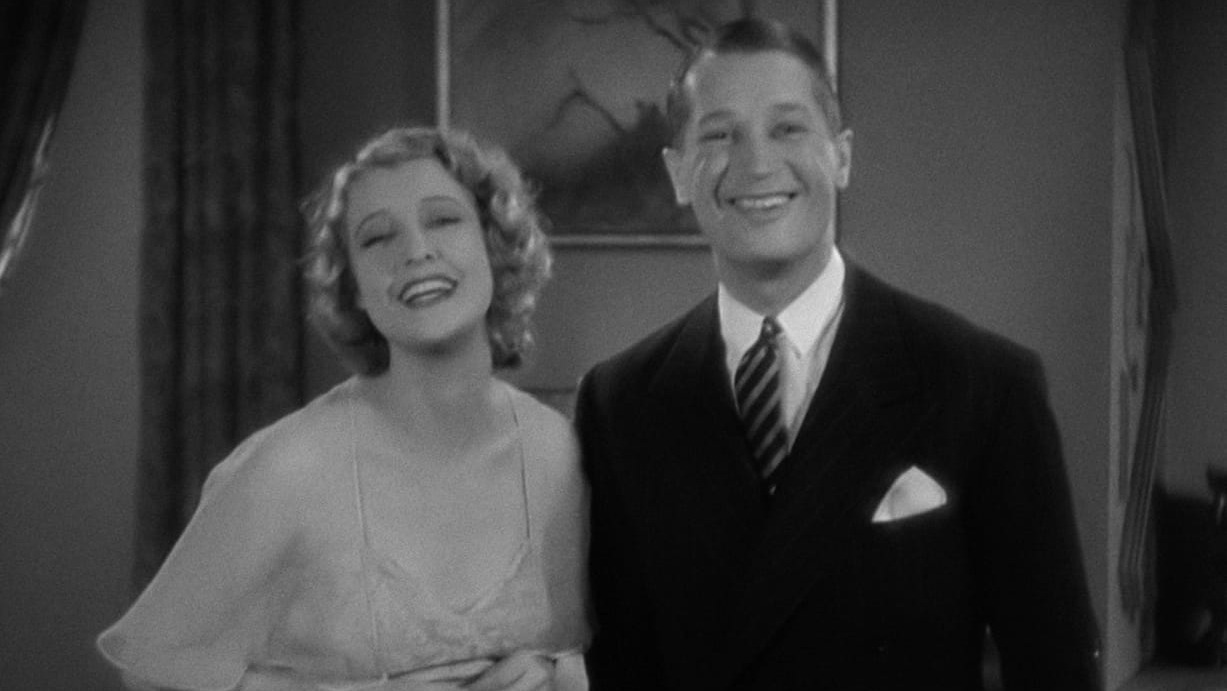
Randwick Ritz, Sydney:
4:00 PM
Sunday 10 May
11:00 AM
Wednesday 13 May
Lido Cinemas, Melbourne:
4:00 PM
Sunday 10 May
11:00 AM
Wednesday 13 May
Rating: PG
Duration: 80 minutes
Country: USA
Language: English
Cast: Maurice Chevalier, Jeanette MacDonald, Genevieve Tobin, Charles Ruggles, Roland Young
SYDNEY TICKETS ⟶
MELBOURNE TICKETS ⟶
4:00 PM
Sunday 10 May
11:00 AM
Wednesday 13 May
Lido Cinemas, Melbourne:
4:00 PM
Sunday 10 May
11:00 AM
Wednesday 13 May
Rating: PG
Duration: 80 minutes
Country: USA
Language: English
Cast: Maurice Chevalier, Jeanette MacDonald, Genevieve Tobin, Charles Ruggles, Roland Young
SYDNEY TICKETS ⟶
MELBOURNE TICKETS ⟶
4K RESTORATION – AUSTRALIAN PREMIERE
‘This charming, richly detailed film is a jewel in the director’s crown, and one of the finest musical comedies of the early sound era.’ – Wheeler Winston Dixon, Senses of Cinema
Even though this pre-code reimagining of his 1924 silent film The Marriage Circle was originally handed to a young George Cukor to direct, Ernst Lubitsch stepped back in midway through production to take the reins, lending his inimitable style to this comic tale of a loving couple simultaneously encountering opportunities for infidelity with each other’s unscrupulous friends. Brightened by a dash of Viennese operetta, some Parisian boulevard humour and recurring fourth-wall breaks from male lead Maurice Chevalier, Lubitsch’s musical also benefits from the gorgeous voice of fellow star Jeanette MacDonald and eight songs mostly composed by Oscar Straus and Leo Robin. Nominated for Best Picture at the Academy Awards, One Hour With You is a fine example of the slyly subversive sex comedies that Lubitsch and his contemporaries perfected in early 1930s Hollywood – the likes of which would shortly be wiped out by the arrival of the censorious Motion Picture Production Code.
Introduced by CJ Johnson at Ritz Cinemas and Peter Hourigan at Lido Cinemas.
‘This charming, richly detailed film is a jewel in the director’s crown, and one of the finest musical comedies of the early sound era.’ – Wheeler Winston Dixon, Senses of Cinema
Even though this pre-code reimagining of his 1924 silent film The Marriage Circle was originally handed to a young George Cukor to direct, Ernst Lubitsch stepped back in midway through production to take the reins, lending his inimitable style to this comic tale of a loving couple simultaneously encountering opportunities for infidelity with each other’s unscrupulous friends. Brightened by a dash of Viennese operetta, some Parisian boulevard humour and recurring fourth-wall breaks from male lead Maurice Chevalier, Lubitsch’s musical also benefits from the gorgeous voice of fellow star Jeanette MacDonald and eight songs mostly composed by Oscar Straus and Leo Robin. Nominated for Best Picture at the Academy Awards, One Hour With You is a fine example of the slyly subversive sex comedies that Lubitsch and his contemporaries perfected in early 1930s Hollywood – the likes of which would shortly be wiped out by the arrival of the censorious Motion Picture Production Code.
Introduced by CJ Johnson at Ritz Cinemas and Peter Hourigan at Lido Cinemas.
FILM NOTES
By John Baxter
By John Baxter
| Born in Sydney, John Baxter has written biographies of Stanley Kubrick, Federico Fellini, Robert De Niro, George Lucas and Steven Spielberg, among others. He lives in Paris. |
Early in this frothy musical, set in a fantasy Paris, Profesor Olivier (Roland Young) surprises his wife Mitzi (Genevieve Tobin) in a compromising situation with doctor Andre Bertier (Maurice Chevalier). ‘Madame is in a very serious condition,’ Bertier explains hastily. ‘Why shouldn’t she be?’, replies Olivier. ‘Conditions are bad everywhere.’
This oblique reference is the sole glimpse of real life in a film which, ignoring the bankruptcies and breadlines of the Depression, sets out exclusively to distract. In mirrored art deco apartments, beautiful people, dressed in the highest of haute couture, flirt and dance, often turning to the audience to confide their feelings or ask for advice, but never about politics or money, always sex.
The flimsy narrative involves two couples who may or may not have committed adultery. Did Bertier and Mitzi indulge? What about Bertier’s wife Colette (Jeanette Macdonald)? Spectators in continental Europe probably thought, ‘Ça m'est égal.’ Who cares? But it was of more concern in the United States, where the Motion Picture Herald warned cinema owners that the film was ‘a bit risqué’ for small towns, and suggested not showing it on Sundays.
The content can’t have come as a surprise. Films like this were a Paramount speciality. The studio took pride in importing talent from the more worldly Austrian and German film industries. Hans Dreier, its head of design, brought to its productions the subtlety of lighting and décor pioneered by Max Reinhardt at the Kammerspiele [theatre] in Vienna and later in Berlin, where his troupe had also included director Ernst Lubitsch.
What sustains the film is the so-called “Lubitsch touch.” Its key is incongruity. Lubitsch introduces the first scene by having the commissaire de police lecture his gendarmes in rhyme. More examples swiftly follow. Colette concludes a whispered description to Mitzi of Bertier’s bedroom accomplishments, by inviting him to demonstrate one of them – imitating an owl. He proudly displays wedding pictures which show him cuddling the bridesmaids with no sign of the bride. She’s represented by a baby picture and her mother by a shot dressed as a belly dancer – ‘but’, he adds in mitigation, ‘she is a wonderful cook.’
Some of the film’s oddities, particularly those of dialogue, may be unintended, due to Lubitsch’s limited English. To help, the studio hired a dialogue director from Broadway. George Cukor arrived in Hollywood to find Lubitsch still busy with his previous film. Since Lubitsch had already supervised the sets, costumes and casting of One Hour With You and refined the screenplay with his regular collaborator, Samson Raphaleson, Cukor took over – only to be halted two weeks in. Lubitsch had screened the rushes with Raphaelson, and neither was amused.
Although Cukor remained on the set, Lubitsch took over. ‘Ernst Lubitsch is supervising,’ reported a puzzled Variety.‘George Cukor, titular director, does considerable sitting out.’ ‘It was goddamned agony for me,’ Cukor complained. ‘I sat on the set and minded my P's and Q's. When it was over, [studio boss] B.P. Schulberg called me in and said, “I'm going to ask you to do me a little favour. I'd like to take your name off this thing.” Instead, Cukor sued. The final credits read ‘Directed by Ernst Lubitsch Assisted by George Cukor’, with Cukor’s name below in smaller type.
Over the next few decades, One Hour With You became something of a film maudit – a production regarded as cursed, or at least unlucky. First release prints were tinted, with individual sequences given a rose hue for interiors and blue for night scenes, but none of these prints appear to have survived. It was also one of the last Hollywood films to be shot in two versions. Chevalier and Macdonald repeated their roles in French, with Lily Damita replacing Genevieve Tobin. Shortly after, this costly practice ceased. Instead, most Hollywood films were dubbed in a new sound studio at Joinville in suburban Paris.
The introduction of a self-censorship Production Code in the US also spelled radical changes for Macdonald and Chevalier. Macdonald would leave such titillating material for a series of operettas opposite Nelson Eddy, while Chevalier, his pouts, leers and winks now too suggestive for the censors, returned to France in 1934, not to reappear in the US until 1947.
Lubitsch and Raphaelson weren’t happy with the ending, and created a new one. Filmed but apparently never used, it was spoken by Chevalier, direct to the audience: ‘Ladies and gentlemen. There must be no misunderstanding between us. I have said there was nothing wrong between Mitzi and me. Now I'm sure the ladies believe me. But the gentlemen may say, “Did you really [just] drink brandy?” I will tell you exactly what happened. We arrived at Mitzi's house at 2:53. Mitzi handed me the key, and, naturally, I opened the door. We went up the stairs. Mitzi handed me another key, and I opened the door to her apartment. We went into her apartment and we sat down in the living room … Fade Out.’ Still not quite sure what took place? Another example perhaps of the Lubitsch touch.
This oblique reference is the sole glimpse of real life in a film which, ignoring the bankruptcies and breadlines of the Depression, sets out exclusively to distract. In mirrored art deco apartments, beautiful people, dressed in the highest of haute couture, flirt and dance, often turning to the audience to confide their feelings or ask for advice, but never about politics or money, always sex.
The flimsy narrative involves two couples who may or may not have committed adultery. Did Bertier and Mitzi indulge? What about Bertier’s wife Colette (Jeanette Macdonald)? Spectators in continental Europe probably thought, ‘Ça m'est égal.’ Who cares? But it was of more concern in the United States, where the Motion Picture Herald warned cinema owners that the film was ‘a bit risqué’ for small towns, and suggested not showing it on Sundays.
The content can’t have come as a surprise. Films like this were a Paramount speciality. The studio took pride in importing talent from the more worldly Austrian and German film industries. Hans Dreier, its head of design, brought to its productions the subtlety of lighting and décor pioneered by Max Reinhardt at the Kammerspiele [theatre] in Vienna and later in Berlin, where his troupe had also included director Ernst Lubitsch.
What sustains the film is the so-called “Lubitsch touch.” Its key is incongruity. Lubitsch introduces the first scene by having the commissaire de police lecture his gendarmes in rhyme. More examples swiftly follow. Colette concludes a whispered description to Mitzi of Bertier’s bedroom accomplishments, by inviting him to demonstrate one of them – imitating an owl. He proudly displays wedding pictures which show him cuddling the bridesmaids with no sign of the bride. She’s represented by a baby picture and her mother by a shot dressed as a belly dancer – ‘but’, he adds in mitigation, ‘she is a wonderful cook.’
Some of the film’s oddities, particularly those of dialogue, may be unintended, due to Lubitsch’s limited English. To help, the studio hired a dialogue director from Broadway. George Cukor arrived in Hollywood to find Lubitsch still busy with his previous film. Since Lubitsch had already supervised the sets, costumes and casting of One Hour With You and refined the screenplay with his regular collaborator, Samson Raphaleson, Cukor took over – only to be halted two weeks in. Lubitsch had screened the rushes with Raphaelson, and neither was amused.
Although Cukor remained on the set, Lubitsch took over. ‘Ernst Lubitsch is supervising,’ reported a puzzled Variety.‘George Cukor, titular director, does considerable sitting out.’ ‘It was goddamned agony for me,’ Cukor complained. ‘I sat on the set and minded my P's and Q's. When it was over, [studio boss] B.P. Schulberg called me in and said, “I'm going to ask you to do me a little favour. I'd like to take your name off this thing.” Instead, Cukor sued. The final credits read ‘Directed by Ernst Lubitsch Assisted by George Cukor’, with Cukor’s name below in smaller type.
Over the next few decades, One Hour With You became something of a film maudit – a production regarded as cursed, or at least unlucky. First release prints were tinted, with individual sequences given a rose hue for interiors and blue for night scenes, but none of these prints appear to have survived. It was also one of the last Hollywood films to be shot in two versions. Chevalier and Macdonald repeated their roles in French, with Lily Damita replacing Genevieve Tobin. Shortly after, this costly practice ceased. Instead, most Hollywood films were dubbed in a new sound studio at Joinville in suburban Paris.
The introduction of a self-censorship Production Code in the US also spelled radical changes for Macdonald and Chevalier. Macdonald would leave such titillating material for a series of operettas opposite Nelson Eddy, while Chevalier, his pouts, leers and winks now too suggestive for the censors, returned to France in 1934, not to reappear in the US until 1947.
Lubitsch and Raphaelson weren’t happy with the ending, and created a new one. Filmed but apparently never used, it was spoken by Chevalier, direct to the audience: ‘Ladies and gentlemen. There must be no misunderstanding between us. I have said there was nothing wrong between Mitzi and me. Now I'm sure the ladies believe me. But the gentlemen may say, “Did you really [just] drink brandy?” I will tell you exactly what happened. We arrived at Mitzi's house at 2:53. Mitzi handed me the key, and, naturally, I opened the door. We went up the stairs. Mitzi handed me another key, and I opened the door to her apartment. We went into her apartment and we sat down in the living room … Fade Out.’ Still not quite sure what took place? Another example perhaps of the Lubitsch touch.
THE RESTORATION
Source: NBCUniversal
Restored in 4K by Universal Pictures at NBCUniversal StudioPost laboratory, from the 35mm dupe negative and a 35mm composite fine grain.
Director: Ernst Lubitsch, assisted by George Cukor; Production Company: Paramount Pictures; Producer: Ernst Lubitsch; Screenplay: Samuel Raphaelson based on the play Only a Dream by Lothar Schmidt; Photography: Victor Milner; Editor: William Shea; Art Direction: Hans Dreier; Costume Design: Travis Banton; Music: W. Franke Harling, Oscar Straus, Rudolph G. Kopp, John Leipold; Lyrics: Leo Robin; Interpolated Music: Richard A. Whiting // Cast: Maurice Chevalier (Dr. Andre Bertier), Jeanette MacDonald (Colette Bertier), Genevieve Tobin (Mitzi Olivier), Charles Ruggles (Adolph), Roland Young (Professor Olivier), Josephine Dunn (Mademoiselle Martel), Richard Carle (Detective Henri Dornier), Barbara Leonard (Mitzi’s maid), George Barbier (Police Commissioner).
USA | 1932 | 80 mins | 4K DCP | B&W | English | PG
Restored in 4K by Universal Pictures at NBCUniversal StudioPost laboratory, from the 35mm dupe negative and a 35mm composite fine grain.
Director: Ernst Lubitsch, assisted by George Cukor; Production Company: Paramount Pictures; Producer: Ernst Lubitsch; Screenplay: Samuel Raphaelson based on the play Only a Dream by Lothar Schmidt; Photography: Victor Milner; Editor: William Shea; Art Direction: Hans Dreier; Costume Design: Travis Banton; Music: W. Franke Harling, Oscar Straus, Rudolph G. Kopp, John Leipold; Lyrics: Leo Robin; Interpolated Music: Richard A. Whiting // Cast: Maurice Chevalier (Dr. Andre Bertier), Jeanette MacDonald (Colette Bertier), Genevieve Tobin (Mitzi Olivier), Charles Ruggles (Adolph), Roland Young (Professor Olivier), Josephine Dunn (Mademoiselle Martel), Richard Carle (Detective Henri Dornier), Barbara Leonard (Mitzi’s maid), George Barbier (Police Commissioner).
USA | 1932 | 80 mins | 4K DCP | B&W | English | PG