
MORTU NEGA (FLORA GOMES, 1988)
THOSE WHOM DEATH REFUSED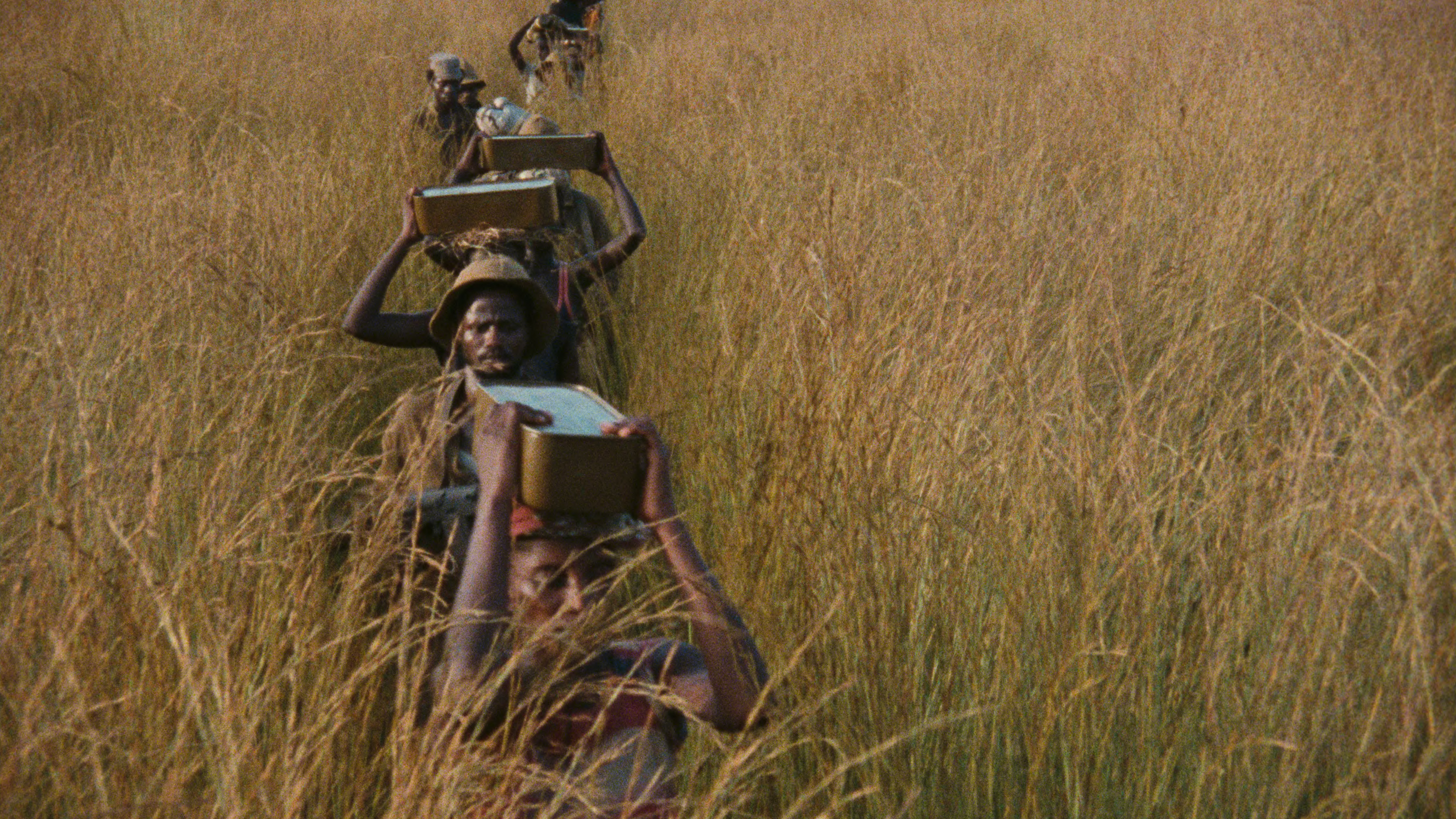
Randwick Ritz, Sydney:
8:00 PM
Tuesday 05 May
Lido Cinemas, Melbourne:
8:00 PM
Tuesday 12 May
Rating: Unclassified 18+
Duration: 96 minutes
Country: Guinea-Bissau
Language: Creole and Portuguese with English subtitles
Cast: Bia Gomes, Mamadu Uri Balde, Tunu Eugenio Almada, Pedro da Silva, Homna Nalete, M’Male Nhasse
SYDNEY TICKETS ⟶
MELBOURNE TICKETS ⟶
8:00 PM
Tuesday 05 May
Lido Cinemas, Melbourne:
8:00 PM
Tuesday 12 May
Rating: Unclassified 18+
Duration: 96 minutes
Country: Guinea-Bissau
Language: Creole and Portuguese with English subtitles
Cast: Bia Gomes, Mamadu Uri Balde, Tunu Eugenio Almada, Pedro da Silva, Homna Nalete, M’Male Nhasse
SYDNEY TICKETS ⟶
MELBOURNE TICKETS ⟶
4K RESTORATION – AUSTRALIAN PREMIERE
‘Gomes often says that cinema is rhythm, music, and above all, light. His enormous sensitivity to social nuance and his tempered optimism fill in the chiaroscuros of the everyday.’ – Ela Bittencourt, Metrograph Journal
The year is 1973 – the tail end of Guinea-Bissau’s 11-year war against Portuguese colonial rule. A woman, Diminga (Bia Gomes), searches for her wounded partner, Sako (Tunu Eugenio Almada), among the rebel forces at a military camp. When the story seamlessly skips ahead to the mid 1970s, guerilla warfare has given way to the couple’s life together as celebrations in their fledgling nation are dampened by straitened conditions.
The first fictional feature film produced in independent Guinea-Bissau, Mortu Nega dwells – as its title loosely translates – on ‘those whom death refused’. Flora Gomes’s representation of the struggle of everyday life as just another kind of war, and of how challenges are dealt with through tools and processes embedded in the native culture, echoes and fulfils the desire expressed by the revered anti-colonial leader, pan-Africanist and poet Amílcar Cabral: for Bissau-Guineans to film their own people, country and liberation.
Introduced by Lucia Sorbera at Ritz Cinemas and Guido Melo at Lido Cinemas.
‘Gomes often says that cinema is rhythm, music, and above all, light. His enormous sensitivity to social nuance and his tempered optimism fill in the chiaroscuros of the everyday.’ – Ela Bittencourt, Metrograph Journal
The year is 1973 – the tail end of Guinea-Bissau’s 11-year war against Portuguese colonial rule. A woman, Diminga (Bia Gomes), searches for her wounded partner, Sako (Tunu Eugenio Almada), among the rebel forces at a military camp. When the story seamlessly skips ahead to the mid 1970s, guerilla warfare has given way to the couple’s life together as celebrations in their fledgling nation are dampened by straitened conditions.
The first fictional feature film produced in independent Guinea-Bissau, Mortu Nega dwells – as its title loosely translates – on ‘those whom death refused’. Flora Gomes’s representation of the struggle of everyday life as just another kind of war, and of how challenges are dealt with through tools and processes embedded in the native culture, echoes and fulfils the desire expressed by the revered anti-colonial leader, pan-Africanist and poet Amílcar Cabral: for Bissau-Guineans to film their own people, country and liberation.
Introduced by Lucia Sorbera at Ritz Cinemas and Guido Melo at Lido Cinemas.
FILM NOTES
By Zac Tomé
By Zac Tomé
| Zac Tomé is a filmmaker and occasional programmer. |
Officially commencing in early 1963 and lasting a little over eleven years, the Guinea-Bissau War of Independence was one of the last of the major anti-colonial guerilla wars in Africa. With the 1956 formation of the African Party for the Independence of Guinea-Bissau and Cape Verde (PAIGC) – led by the revolutionary Amílcar Cabral – and the general political fervour that incited the collapse of many other European colonies in Africa, Portugal’s flailing attempt to grip onto the remanants of its empire proved futile. After the assassination of Cabral in 1973, The People’s National Assembly – the main legislative body of Guinea Bissau at the time –declared the country independent. The official independence of Guinea Bissau came one year later, following a military coup known as the Carnation Revolution. Growing up in Guinea-Bissau, the filmmaker Flora Gomes was a great admirer of Cabral and supported the resistance against Portugal. He studied filmmaking in Cuba and Senegal, seeking to fulfil Cabral’s dream of Bissau-Guineans documenting their own people, country, and liberation.
Mortu Nega begins at the tail-end of the war and, from that point, its narrative concerns can be broken down into three ‘movements’ (as suggested by California Newsreel, 2001), each of which maps ‘a different stage in the revolutionary process.’ The first minutes of the film present a frank depiction of guerilla warfare, where the languor of trudging through forests is interrupted by hasty reactions to the fire of artillery. It finds its focus when Diminga (Bia Gomes), a Bissau-Guinean woman, wanders through the jungle with a section of the resistance, searching for her lover Sako (Tunu Eugenio Almada), a wounded commander. After the war, Diminga and Sako try to re-acquaint themselves with their village and the minutiae of daily existence. As things settle, the task becomes readjusting to the challenges of procuring resources, of physical health, and those of the environment at large; ultimately the film moves into a mythic realm in the search for answers.
With Mortu Nega, Gomes shows that the bounds of war aren’t limited to the declarative dates set, usually, by the coloniser, and that the question of “what might come after a revolution?” is not divorced from the war itself or what preceded it. When Cabral’s death is announced, Lebeth (M’Male Nhasse), an older woman whom Diminga befriends during the war, warns others that ‘this war began before the births of me, my mother and grandmother.’ This is made most explicit later, when Sako encounters an outdoor class. The teacher asks the students what they think the word luta (struggle) means, to which a student responds: ‘struggle is what I do to feed my children.’ When the teacher asks whether the struggle is over, Sako answers ‘no.’ The film is contained in this idea of the struggle as a general daily task, and thus one that never ends. This idea collapses timelines so that history, the present and the future are not siloed from one another. As suggested by the student whose struggle is to feed her children, it is subversive for a film centred on war to focus instead on one’s necessary acts of survival and this affirms the lives of those who were, taking a literal translation, living in ‘ “the negation of death”, life in defiance of death’ (Manthia Diawara, 1992) and what is necessary for their survival.
Gomes has stated that his objective was not to make a war film but, rather, a ‘film about a woman in war who wanted to find her husband’ (Gomes, 2022). If Diminga’s struggle was to find Sako, once he is “found” what arises is the struggle of maintaining the collectively-minded disposition that gave the Bissau-Guineans their state of independence. It is no surprise then that the image that follows the outdoor class is Diminga working to retrieve water from a well with other women from their village. Diminga persists in her attempts to aid her fellows and her lover but is consistently confronted by a shift in her community’s mindset. At one point, a fellow Bissau-Guinean woman tries to sell Diminga the food she received as a ration, for an increased price. On another occasion, she seeks out an old comrade of Sako’s to help with his war-related injuries; now a city-dwelling bureaucrat determined to maintain his position in power, the man pretends to not know Sako. The marketisation of life and an individualist disposition towards it become a major hurdle in the attempt to continue what was once a collectively-led struggle. Considering the resistance was ideologically Marxist, the interpersonal conflict could be interpreted as a reflection of the coloniser's intent to alter the politics of the "native" population and points to an additional struggle that can further hinder social cohesion in post-revolutionary life.
For a film responding to colonialism, there is notably little mention or appearance of the coloniser. It is perhaps the conscious absence of the Portuguese that is the anti-colonial assertion in the film. By being liberated from their presence, the Bissau-Guineans can reorient their life, and its embedded struggles, towards their own cultural practices. The culmination of this idea emerges most pertinently in the film’s final scenes. At the peak of the onslaught of new found struggles, the village is dealt another blow with a severe drought. While sweeping dust away, Diminga speaks to her fellows about a dream she had that foresaw these winds and drought. An elder suggests they organise a death ceremony to change the course of Diminga’s ill-fated dream. The village comes together, singing and dancing to summon the dead. Pivotally, Diminga reasserts a cyclical relationship to history that is necessary to the maintenance of the people’s future, when she tells the dead that ‘with her tears and sweat’ she has watered the trees ‘that offer their shade to our dead.’ The “dead” reciprocate and rain pours the next day. The ceremony denies the common attempt by the coloniser to sever the histories that preceded their rule. With Mortu Nega, Gomes ultimately affirms Cabral’s wish that it would be Bissau-Guineans filming their own lives and their liberation, defined not by the coloniser but instead by their own daily struggles and with their own tools.
Mortu Nega begins at the tail-end of the war and, from that point, its narrative concerns can be broken down into three ‘movements’ (as suggested by California Newsreel, 2001), each of which maps ‘a different stage in the revolutionary process.’ The first minutes of the film present a frank depiction of guerilla warfare, where the languor of trudging through forests is interrupted by hasty reactions to the fire of artillery. It finds its focus when Diminga (Bia Gomes), a Bissau-Guinean woman, wanders through the jungle with a section of the resistance, searching for her lover Sako (Tunu Eugenio Almada), a wounded commander. After the war, Diminga and Sako try to re-acquaint themselves with their village and the minutiae of daily existence. As things settle, the task becomes readjusting to the challenges of procuring resources, of physical health, and those of the environment at large; ultimately the film moves into a mythic realm in the search for answers.
With Mortu Nega, Gomes shows that the bounds of war aren’t limited to the declarative dates set, usually, by the coloniser, and that the question of “what might come after a revolution?” is not divorced from the war itself or what preceded it. When Cabral’s death is announced, Lebeth (M’Male Nhasse), an older woman whom Diminga befriends during the war, warns others that ‘this war began before the births of me, my mother and grandmother.’ This is made most explicit later, when Sako encounters an outdoor class. The teacher asks the students what they think the word luta (struggle) means, to which a student responds: ‘struggle is what I do to feed my children.’ When the teacher asks whether the struggle is over, Sako answers ‘no.’ The film is contained in this idea of the struggle as a general daily task, and thus one that never ends. This idea collapses timelines so that history, the present and the future are not siloed from one another. As suggested by the student whose struggle is to feed her children, it is subversive for a film centred on war to focus instead on one’s necessary acts of survival and this affirms the lives of those who were, taking a literal translation, living in ‘ “the negation of death”, life in defiance of death’ (Manthia Diawara, 1992) and what is necessary for their survival.
Gomes has stated that his objective was not to make a war film but, rather, a ‘film about a woman in war who wanted to find her husband’ (Gomes, 2022). If Diminga’s struggle was to find Sako, once he is “found” what arises is the struggle of maintaining the collectively-minded disposition that gave the Bissau-Guineans their state of independence. It is no surprise then that the image that follows the outdoor class is Diminga working to retrieve water from a well with other women from their village. Diminga persists in her attempts to aid her fellows and her lover but is consistently confronted by a shift in her community’s mindset. At one point, a fellow Bissau-Guinean woman tries to sell Diminga the food she received as a ration, for an increased price. On another occasion, she seeks out an old comrade of Sako’s to help with his war-related injuries; now a city-dwelling bureaucrat determined to maintain his position in power, the man pretends to not know Sako. The marketisation of life and an individualist disposition towards it become a major hurdle in the attempt to continue what was once a collectively-led struggle. Considering the resistance was ideologically Marxist, the interpersonal conflict could be interpreted as a reflection of the coloniser's intent to alter the politics of the "native" population and points to an additional struggle that can further hinder social cohesion in post-revolutionary life.
For a film responding to colonialism, there is notably little mention or appearance of the coloniser. It is perhaps the conscious absence of the Portuguese that is the anti-colonial assertion in the film. By being liberated from their presence, the Bissau-Guineans can reorient their life, and its embedded struggles, towards their own cultural practices. The culmination of this idea emerges most pertinently in the film’s final scenes. At the peak of the onslaught of new found struggles, the village is dealt another blow with a severe drought. While sweeping dust away, Diminga speaks to her fellows about a dream she had that foresaw these winds and drought. An elder suggests they organise a death ceremony to change the course of Diminga’s ill-fated dream. The village comes together, singing and dancing to summon the dead. Pivotally, Diminga reasserts a cyclical relationship to history that is necessary to the maintenance of the people’s future, when she tells the dead that ‘with her tears and sweat’ she has watered the trees ‘that offer their shade to our dead.’ The “dead” reciprocate and rain pours the next day. The ceremony denies the common attempt by the coloniser to sever the histories that preceded their rule. With Mortu Nega, Gomes ultimately affirms Cabral’s wish that it would be Bissau-Guineans filming their own lives and their liberation, defined not by the coloniser but instead by their own daily struggles and with their own tools.
THE RESTORATION
Source: Cineteca di Bologna
Restored by The Film Foundation’s World Cinema Project and Cineteca di Bologna at L’Immagine Ritrovata laboratory in association with Flora Gomes. Funding provided by the Hobson/Lucas Family Foundation.This restoration is part of the African Film Heritage Project, an initiative created by The Film Foundation’s World Cinema Project, the Pan African Federation of Filmmakers and UNESCO – in collaboration with Cineteca di Bologna – to help locate, restore, and disseminate African cinema.
![]()
![]()
Director: Flora Gomes; Production Company: Instituto Nacional de Cinema da Guiné-Bissau; Screenplay: Manuel Rambout Barcelos, Flora Gomes, David Lang; Photography: Dominique Gentil; Editor: Christiane Lack; Music: Djanun Dabo Sidonio, Pais Cuaresma // Cast: Bia Gomes (Diminga), Mamadu Uri Balde (Sanabaio), Tunu Eugenio Almada (Sako), Pedro da Silva (Estin), Homna Nalete (Mandembo), M’Male Nhasse (Labeth).
Guinea-Bissau | 1988 | 96 mins | 4K DCP | Colour | Creole and Portuguese with English subtitles | Unclassified 18+
Restored by The Film Foundation’s World Cinema Project and Cineteca di Bologna at L’Immagine Ritrovata laboratory in association with Flora Gomes. Funding provided by the Hobson/Lucas Family Foundation.This restoration is part of the African Film Heritage Project, an initiative created by The Film Foundation’s World Cinema Project, the Pan African Federation of Filmmakers and UNESCO – in collaboration with Cineteca di Bologna – to help locate, restore, and disseminate African cinema.


Director: Flora Gomes; Production Company: Instituto Nacional de Cinema da Guiné-Bissau; Screenplay: Manuel Rambout Barcelos, Flora Gomes, David Lang; Photography: Dominique Gentil; Editor: Christiane Lack; Music: Djanun Dabo Sidonio, Pais Cuaresma // Cast: Bia Gomes (Diminga), Mamadu Uri Balde (Sanabaio), Tunu Eugenio Almada (Sako), Pedro da Silva (Estin), Homna Nalete (Mandembo), M’Male Nhasse (Labeth).
Guinea-Bissau | 1988 | 96 mins | 4K DCP | Colour | Creole and Portuguese with English subtitles | Unclassified 18+